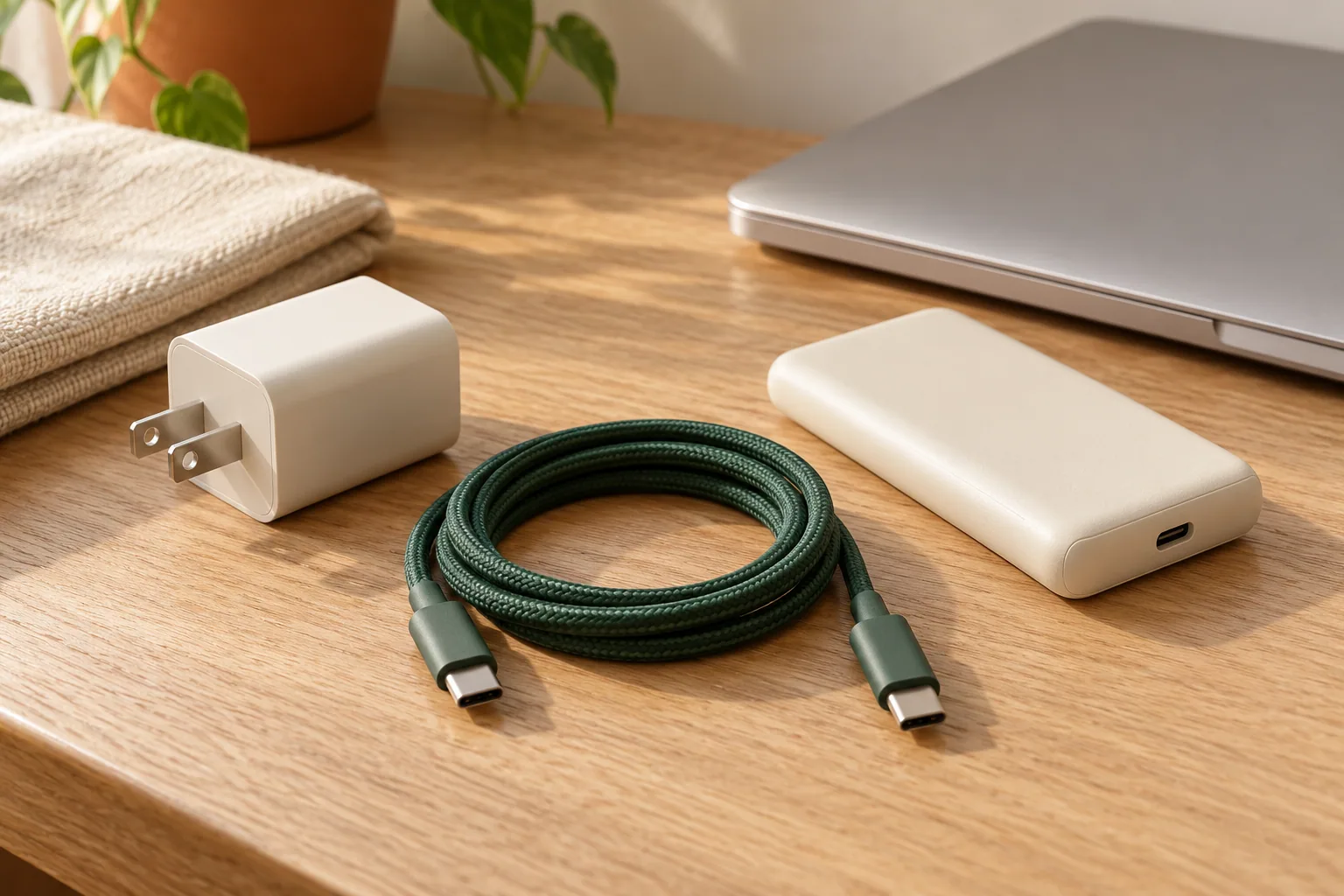
The most useful travel power bank is one whose specifications you can explain and whose carriage is accepted for your itinerary. More capacity is not automatically more convenient. This research-based checklist separates charging needs from airline requirements, so the decision happens before departure rather than at a security tray.
The short version
- Read the watt-hour rating and retain clear manufacturer information.
- Check every operating airline's current power-bank policy.
- Keep the bank accessible in cabin baggage, including during a gate check.
Specify the job before the capacity
List what needs a top-up between dependable charging opportunities: a phone used for navigation, headphones, or a laptop during a long connection. Check the required output and cable for each device. A large capacity label says nothing on its own about whether the relevant port supplies a laptop's required charging profile.
Treat advertised capacity and delivered charging as different questions. Avoid translating a capacity number into a guaranteed number of phone charges. Instead, compare the bank's documented energy rating, output, size, and weight with the equipment you will carry. Make sure the model and rating on the actual unit remain readable; a screenshot of a shop listing is a poor substitute for identifiable equipment.
Read the itinerary, not a generic airline chart
Check the current dangerous-goods page for every operating carrier, including a regional or codeshare connection. Record the permitted watt-hour rating, number of banks, approval process, storage location, and restrictions on using or recharging them onboard. Airport and national requirements may also affect the journey. Do not assume a previous flight establishes acceptance for the next one.
Rules are changing. IATA's March 2026 operator guidance addresses a two-power-bank limit and prohibits recharging the bank during flight; it also distinguishes a recommendation against using one to recharge other devices. Carrier requirements and national implementation need checking for the actual trip. This guide deliberately does not offer a single worldwide capacity allowance or suggest that approval for a larger spare battery automatically covers a power bank.
Make inspection and packing routine
Inspect the bank and cable before packing. Do not travel with a damaged or recalled battery. The FAA's PackSafe guidance excludes hazardous damaged or recalled batteries and tells passengers to alert cabin crew immediately if a battery is overheating, expanding, smoking, or burning. A purchase receipt does not remove those conditions.
Pack the bank to prevent short circuits and accidental damage, following its instructions and your carrier's policy. Keep it separate from loose metal objects and accessible rather than buried in a tightly packed suitcase. Check any recall information from the manufacturer before the journey. If the unit is questionable, leave it out and arrange another charging plan.
Rehearse the gate-check moment
Your cabin suitcase may be taken for the hold even when it meets the booked allowance. FAA guidance requires removing power banks and spare lithium batteries before that bag is gate-checked. Keep a small, accessible pouch that can stay with you, and check the airline's required onboard storage location.
Charge devices before leaving where practical, save essential travel information offline, and carry the cable you have already checked for compatibility. These choices reduce dependence on a particular socket or permission to charge in flight. At boarding, follow current crew instructions; the plan should still work if the power bank must remain unused.
Your next-step checklist
- Read the actual bank's Wh rating, condition, and recall status.
- Confirm capacity, quantity, approval, storage, and use rules for every carrier.
- Match the output port and cable to your devices.
- Protect the bank and keep it easy to remove before a gate check.
- Prepare essential travel information and charge devices before departure.
Sources & further reading
Reference material used for this research guide. Requirements and product documentation can change; check the relevant source before acting.
This is a research-based guide, not a hands-on product review. It contains no affiliate shopping links. Read our editorial approach.